In the insurance market, underwriters are constantly reviewing a steady stream of submissions, each one competing for limited time and attention. At the same time, agents are working to move accounts forward and deliver the best possible outcomes for their clients. This leads to an important question: how do you make sure your submission stands out?
The answer is simpler than you might think. A few intentional steps can help your underwriter quickly understand the account, evaluate the opportunity, and make a confident decision faster.
While every submission deserves careful consideration, volume is a reality. Using a strong narrative, providing context around losses and unique operations, and clearly outlining the opportunity can all help your submission rise to the top of the pile.
Start with a Strong Narrative
A great submission begins with a clear, thoughtful narrative. This gives your underwriter an immediate starting point and helps highlight the most important aspects of the account right away.
The narrative serves to set the tone for the entire submission and frames expectations from the outset. It’s also the ideal place to call out special coverage needs, rate considerations, or anything else that may not be obvious from the application alone.
Too often, narratives restate information already found in the forms. To help yours stand out, use it to focus on what truly matters and tell the story behind the account. A strong narrative helps your underwriter get oriented quickly and confidently.
Provide Context for Losses and Unique Operations
Your initial submission is also the best opportunity to provide details that applications don’t always capture, like loss history and unique operations.
From the underwriting desk, losses without explanation leave room for assumptions. Providing background on what happened, why the loss may not be repeatable, and what improvements were made afterward can completely change how the risk is viewed.
Unique operations should be clearly outlined as well, so coverage expectations are aligned right from the start. Calling out specific controls, safety measures, or oversight for higher-hazard work can address concerns early and save time later.
Here’s an example. Imagine you’re working with a large concrete flatwork contractor that has experienced several significant auto losses. Premiums have increased, and the client is ready to shop the account. A strong submission could highlight changes to hiring practices, the introduction of telematics, or ongoing MVR monitoring. You might also explain excavation work performed at depth and how it differs from similar accounts. That added clarity can help justify a quote where a decline might otherwise be expected.
Clearly Define the Opportunity
Underwriters aren’t just evaluating risk, but opportunity. A strong introduction helps set clear expectations about what the client is looking for and what success looks like.
Is the goal a price decrease? Higher limits? Improved claims management or access to risk services? Sharing this upfront helps your underwriter focus their efforts appropriately.
Most importantly, outline what it will take to win the account. Target premiums, deductible structures, specific forms, or required endorsements all help paint a clear picture of the opportunity. When underwriters understand your goals from the start, they can quickly determine whether they’re a good fit and prioritize accordingly.
Clear Communication Makes the Difference
At the end of the day, not every account will be the right fit. That’s just part of the process. Clear, upfront communication can help everyone reach that conclusion faster, allowing you more time to find another solution.
Strong narratives, thoughtful explanation of losses, and realistic expectations speed up underwriting processes and position your submission as one worth engaging with. In a busy market, clarity and context go a long way toward better outcomes for both you and your client.
At CWG, we see firsthand how clear communication and thoughtful submissions make a difference. Our underwriting team values context, collaboration, and a complete picture of the account – because that’s how we help agents move business forward with confidence. When initial submissions can tell the full story, everyone wins.
Names, contact phone number for all involved parties and witnesses
Date, location, and time of loss
Any police, fire, or other authorities involved or who responded
Description of damage
How the loss occurred
TERMS OF SERVICE AGREEMENT
Welcome to the Continental Western Group® E-Pay Express online bill payment services website, which provides bill payment options and services (such website, options, and services are individually and collectively referred to herein as the “E-Pay Express Services”) available to customers of the Continental Western Group®, an operating unit of Berkley Insurance Company, and affiliated companies (referred to herein as “OU acronym, i.e. “CWG”). CWG® is willing to provide the E-Pay Express Services to you, a customer of CWG, only upon your agreement that your access to and use of the E-Pay Express Services will be subject to the following E-Pay Express Terms of Service Agreement (the “Agreement”). This Agreement describes the terms and conditions under which CWG will make E-Pay Express Services available to CWG’s customers (“you”). The Agreement may be revised without notice and will become effective upon posting on this site and your use of the E-Pay Express Services.I. DEFINITIONSThe following defined terms are used in this Agreement: E-Pay Express is a service you can use to view and pay your CWG bill online securely. CWG has licensed the right to use E-Pay Express from an unaffiliated third party, Fifth Third Bank. and/or its affiliates (“Fifth Third”). Account means the Account with CWG to which you authorize a bill payment to be directed. Payment Instruction means your instruction and authorization to E-Pay Express to make a bill payment to your Account. Payment Account means the bank account that you authorize E-Pay Express to debit when you make your bill payment using account information from your personal or business checking or savings account. Payment Card means the credit or debit card that you instruct E-Pay Express to charge to pay your bill payment. Business Day means Monday through Friday, excluding Federal Reserve holidays. Scheduled Payment Date means the Business Day of your choice upon which E-Pay Express will attempt to complete your bill payment and initiate the appropriate debit to your Payment Account or Payment Card. CWG includes the following affiliated companies of Berkley Insurance Company: Acadia Insurance Company, Continental Western Insurance Company, Firemen’s Insurance Company of Washington, D.C., Tri-State Insurance Company of Minnesota, Union Insurance Company (collectively referred to herein as “Insurers”). All payments processed through E-Pay Express Services are paid to CWG on behalf of itself or one of the Insurers listed above; however, each of the Insurers has sole financial responsibility for its own products and services, including the E-Pay Express Services provided in connection with those products and services. You should refer to your insurance policy for the applicable Insurer.II. DESCRIPTION OF E-PAY EXPRESS SERVICES A. The E-Pay Express Services provide you with access to various online resources, including applications that allow you to view your CWG bill. Unless explicitly stated otherwise, any new features that augment or enhance the current E-Pay Express Services, including the release of new services, shall be subject to this Agreement. Upon your acceptance of this Agreement, CWG grants you a personal, nonexclusive, non-transferable license to access and use the E-Pay Express Services, subject to this Agreement, solely for the purpose of viewing and paying your Account electronically. The foregoing license includes the specific rights to use the available applications and functionalities of the E-Pay Express Services and to print information from the E-Pay Express Services. CWG and Fifth Third do, however, reserve the right to, without notice: (a) modify, suspend or terminate operation of or access to the E-Pay Express Services at any time for any reason; (b) modify or change the E-Pay Express Services or its applicable operating policies at any time; and (c) interrupt the E-Pay Express Services as necessary to perform routine and non-routine maintenance, error corrections, or other changes. CWG also reserves the right to modify this Agreement at any time, in which case you will be provided notice that the Agreement has been changed. Your continued use of the E-Pay Express Services after said notice of the changed Agreement constitutes your agreement with and acceptance of the changed Agreement.
BILL PAYMENT SERVICE
(a) When you initiate a Payment Instruction, you authorize E-Pay Express to charge your Payment Card or debit your Payment Account and remit funds to CWG on your behalf so that the funds arrive to pay your bill as close to the Business Day designated by you as is reasonably possible. While it is anticipated that most transactions will be processed on the day you choose, it is understood that due to circumstances beyond the control of CWG and Fifth Third, some transactions may take a day or so longer to be credited to your Account.(b) If E-Pay Express is unable to obtain funds for a bill payment for any reason associated with your Payment Card or Payment Account (for example, there is not a sufficient balance available on your Payment Card or in your Payment Account to cover the transaction), then we will not be able to complete your bill payment transaction. If there is a problem in processing your Payment Instruction, CWG or Fifth Third may attempt to contact you, using the telephone number you have provided(c) If E-Pay Express makes a bill payment to your Account, but is unable to obtain funds for that payment from your Payment Card or Payment Account, you agree that your bill payment will be reversed.III. LIABILITY FOR FAILURE TO COMPLETE TRANSACTIONSA. E-Pay Express will use commercially reasonable efforts to process your bill payments in accordance with your Payment Instructions. However, CWG and Fifth Third shall incur no liability if a bill payment is not made in a timely manner or if any payments initiated by you through the E-Pay Express Services cannot be completed because of any one or more of the following circumstances:
Sufficient funds are not available through your Payment Account or your Payment Card;
Any failure on the part of CWG or Fifth Third to account correctly for or credit the payment in a timely manner, or any other mishandling of your payment by CWG or Fifth Third;
The E-Pay Express Services are not working properly and you know or have been advised by CWG or Fifth Third about the malfunction before you execute the transaction;
You do not provide CWG or Fifth Third with all required information to complete the bill payment, such as your correct name, telephone number, or your complete and correct Payment Card or Payment Account information; or
Circumstances over which CWG or Fifth Third have no control include, but are not limited to, large-scale technical malfunctions, including, but not limited to, loss of access to the Internet or loss of access to the Federal Reserve System, prolonged outages of telephone lines, electricity or similar infrastructure, acts of God, war, riot, civil disobedience or similar events of insurrection, governmental or court orders, regulatory or legislative changes by any local, state or federal governmental agency, strikes, work stoppages or other similar occurrences or circumstances.
IV. USER NAMES AND PASSWORDSA. During the registration process for the E-Pay Express Services, a User Name, and Password (collectively, “Authentication Materials”) will be established for your use in accessing the E-Pay Express Services. The Authentication Materials are intended for your use only. You agree: (a) not to disclose such Authentication Materials to any third party, (b) to take reasonable care to protect such Authentication Materials from inadvertent disclosure to third parties, and (c) to immediately notify CWG of any loss or unauthorized use of such Authentication Materials. You agree that you will be responsible for all actions taken using your Authentication Materials.V. YOUR REPRESENTATIONS.A. You hereby represent to CWG and agree that:
any and all information that you provide to CWG or Fifth Third to use the E-Pay Express Services will be accurate and complete;
you will not use the E-Pay Express Services to access information about any account unless you have authority to do so by the person or company whose account you are accessing;
you will not provide any information to CWG or Fifth Third or in your use of the E-Pay Express Services, including account information unless you have the authority to communicate such information;
you will not use the E-Pay Express Services for any illegal or improper purposes;
you will not use: (i) any robot, spider, other automatic device to monitor or copy portions of the E-Pay Express home page or the E-Pay Express Services or the content contained therein, or (ii) any device, software, or routine to interfere or attempt to interfere with the proper working of the Payer Express home page or the E-Pay Express Services;
you will not download, reproduce, duplicate, copy or otherwise extract any portion of the E-Pay Express home page or the E-Pay Express Services for the purpose of sale or resale, or make other commercial use thereof, and
CWG or Fifth Third may send you electronic correspondence describing changes to the E-Pay Express Services and this Agreement.
Agency of Oversite: Wyoming Department of Workforce Services Workers’ Compensation Division
Posting Notice: Certificate of Good Standing Required
Addional Posting Information: Any business conducting work in the State of Wyoming or hiring a Wyoming resident as an employee must register with the Division of Workers’ Compensation and Unemployment Insurance.
Agency of Oversite: Missouri Division of Workers Compensation 2
Posting Notice: Workplace Poster Required
Addional Posting Information: The forms are mandatory in both English and Spanish. The forms must be posted proximately to each other. The forms are also available in two sizes—poster and letter size.
Agency of Oversite: Michigan Workers Compensation Agency
Posting Notice: No Poster Required
Addional Posting Information: There is currently no requirement for the posting of a workers compensation insurance notice by the state of Michigan. But there are two posters that an employer may voluntarily post in the workplace.
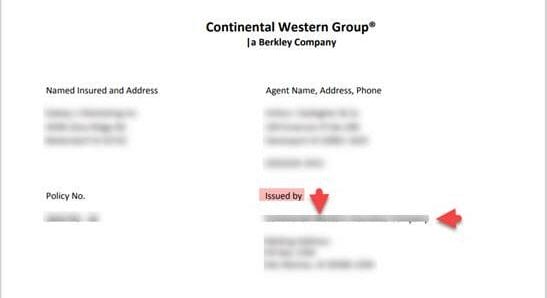
Please Note: Colorado Form WC 50 requires the name of your Insurer to be included on the Form prior to posting at your location(s). You can locate the name of your Insurer here on your policy.
Abbreviation: IA
Agency of Oversite: Iowa Division of Workers Compensation
Posting Notice: No Poster Required
Addional Posting Information: There is no posting notice requirement for employers that have secured workers compensation coverage or qualified as a selfinsurer. Only employers who have failed to secure coverage for the liabilities assumed under the Act must post a notice of the failure to insure.