When workplace injuries occur, employees need guidance and support. This is where having a strong Return-to-Work (RTW) program plays a critical role. Fewer surprises lead to better outcomes, and CWG’s Workers’ Recovery Unit (WRU) representatives serve as guides throughout the recovery journey.
Why It Matters
Developing a strong Return-to-Work program is a win for both employees and employers. For example, employees get the support and flexibility they need as they transition back to work, while staying productive and feeling valued. For employers, a RTW program can reduce turnover and training costs, lead to better claim outcomes, and help build a stronger workplace culture.
Factors That Contribute to a Successful Return-to-Work-Program
Management commitment
Early intervention
Ongoing communication
Availability of meaningful modified duty assignments
Clearly documented return-to-work policies and procedures
Flexible job accommodations
Common Employee Concerns
Financial Stability
Returning to modified work can help maintain earnings and reduce financial stress.
Job Security
RTW programs reinforce the employer’s commitment to keeping employees connected to work.
Recovery and Health
Structured RTW plans ensure work activities align with medical restrictions and recovery goals.
Workplace Relationships
RTW programs help employees remain connected to their coworkers and company culture.
Understanding the Process
RTW programs enhance the collective message that the insurance provider and their employer are here to provide guidance, coordination, and consistent communication throughout the recovery journey.
Common Workplace Injuries/Modified Duties
Having modified duty plans for some of the most common injuries can help employees transition back to work while maintaining a sense of purpose and value.
Common light duties may include administrative support, data entry, inventory control, safety observations, or equipment inspections. Modifying job duties to accommodate limitations could involve seated work, customer service activities, scheduling, dispatch functions, or document management.
As a real-life example, an employee suffered a lumbar strain while lifting heavy inventory. Instead of remaining completely off work, the employee transitioned to inventory tracking and quality control duties. By doing this, they were able to maintain their wages, stayed connected to the workplace, and returned to full duty after completing physical therapy.
Communication Tips
It is important for both employers and employees to understand the importance of clear communication. When conversations start early and expectations are clearly communicated, it can help reduce confusion and lead to better outcomes for everyone.1 Aim to stay positive, calm, and supportive when communicating with injured workers. A reassuring tone can help them feel valued and ensure they feel supported throughout the process.
Establish contact immediately following the injury and maintain regular communication throughout recovery.
Clearly communicate expectations, job duties, restrictions, and recovery milestones.
Focus discussions on recovery progress, employee well-being, and available support resources instead of solely focusing on the claim.
Have a coordinated RTW process that ensures consistent messaging and alignment regarding restrictions and work capabilities.
Identify meaningful transitional assignments that accommodate restrictions while maintaining productivity.
The CWG Difference
The Workers’ Recovery Unit doesn’t approach work injuries like everyone else. Being familiarized with the needs and motivations of the injured ensures positive outcomes for all involved. CWG’s WRU is committed to clear, consistent communication throughout the claim for all parties. We’re here to help and we believe compassion, communication, and collaboration provide the best experience for everyone.
Building a Strong Return-to-Work Program was last modified: August 24th, 2026 by CWG
Policy Number
Names, contact phone number for all involved parties and witnesses
Date, location, and time of loss
Any police, fire, or other authorities involved or who responded
Description of damage
How the loss occurred
TERMS OF SERVICE AGREEMENT
Welcome to the Continental Western Group® E-Pay Express online bill payment services website, which provides bill payment options and services (such website, options, and services are individually and collectively referred to herein as the “E-Pay Express Services”) available to customers of the Continental Western Group®, an operating unit of Berkley Insurance Company, and affiliated companies (referred to herein as “OU acronym, i.e. “CWG”). CWG® is willing to provide the E-Pay Express Services to you, a customer of CWG, only upon your agreement that your access to and use of the E-Pay Express Services will be subject to the following E-Pay Express Terms of Service Agreement (the “Agreement”). This Agreement describes the terms and conditions under which CWG will make E-Pay Express Services available to CWG’s customers (“you”). The Agreement may be revised without notice and will become effective upon posting on this site and your use of the E-Pay Express Services.I. DEFINITIONSThe following defined terms are used in this Agreement: E-Pay Express is a service you can use to view and pay your CWG bill online securely. CWG has licensed the right to use E-Pay Express from an unaffiliated third party, Fifth Third Bank. and/or its affiliates (“Fifth Third”). Account means the Account with CWG to which you authorize a bill payment to be directed. Payment Instruction means your instruction and authorization to E-Pay Express to make a bill payment to your Account. Payment Account means the bank account that you authorize E-Pay Express to debit when you make your bill payment using account information from your personal or business checking or savings account. Payment Card means the credit or debit card that you instruct E-Pay Express to charge to pay your bill payment. Business Day means Monday through Friday, excluding Federal Reserve holidays. Scheduled Payment Date means the Business Day of your choice upon which E-Pay Express will attempt to complete your bill payment and initiate the appropriate debit to your Payment Account or Payment Card. CWG includes the following affiliated companies of Berkley Insurance Company: Acadia Insurance Company, Continental Western Insurance Company, Firemen’s Insurance Company of Washington, D.C., Tri-State Insurance Company of Minnesota, Union Insurance Company (collectively referred to herein as “Insurers”). All payments processed through E-Pay Express Services are paid to CWG on behalf of itself or one of the Insurers listed above; however, each of the Insurers has sole financial responsibility for its own products and services, including the E-Pay Express Services provided in connection with those products and services. You should refer to your insurance policy for the applicable Insurer.II. DESCRIPTION OF E-PAY EXPRESS SERVICES A. The E-Pay Express Services provide you with access to various online resources, including applications that allow you to view your CWG bill. Unless explicitly stated otherwise, any new features that augment or enhance the current E-Pay Express Services, including the release of new services, shall be subject to this Agreement. Upon your acceptance of this Agreement, CWG grants you a personal, nonexclusive, non-transferable license to access and use the E-Pay Express Services, subject to this Agreement, solely for the purpose of viewing and paying your Account electronically. The foregoing license includes the specific rights to use the available applications and functionalities of the E-Pay Express Services and to print information from the E-Pay Express Services. CWG and Fifth Third do, however, reserve the right to, without notice: (a) modify, suspend or terminate operation of or access to the E-Pay Express Services at any time for any reason; (b) modify or change the E-Pay Express Services or its applicable operating policies at any time; and (c) interrupt the E-Pay Express Services as necessary to perform routine and non-routine maintenance, error corrections, or other changes. CWG also reserves the right to modify this Agreement at any time, in which case you will be provided notice that the Agreement has been changed. Your continued use of the E-Pay Express Services after said notice of the changed Agreement constitutes your agreement with and acceptance of the changed Agreement.
BILL PAYMENT SERVICE
(a) When you initiate a Payment Instruction, you authorize E-Pay Express to charge your Payment Card or debit your Payment Account and remit funds to CWG on your behalf so that the funds arrive to pay your bill as close to the Business Day designated by you as is reasonably possible. While it is anticipated that most transactions will be processed on the day you choose, it is understood that due to circumstances beyond the control of CWG and Fifth Third, some transactions may take a day or so longer to be credited to your Account.(b) If E-Pay Express is unable to obtain funds for a bill payment for any reason associated with your Payment Card or Payment Account (for example, there is not a sufficient balance available on your Payment Card or in your Payment Account to cover the transaction), then we will not be able to complete your bill payment transaction. If there is a problem in processing your Payment Instruction, CWG or Fifth Third may attempt to contact you, using the telephone number you have provided(c) If E-Pay Express makes a bill payment to your Account, but is unable to obtain funds for that payment from your Payment Card or Payment Account, you agree that your bill payment will be reversed.III. LIABILITY FOR FAILURE TO COMPLETE TRANSACTIONSA. E-Pay Express will use commercially reasonable efforts to process your bill payments in accordance with your Payment Instructions. However, CWG and Fifth Third shall incur no liability if a bill payment is not made in a timely manner or if any payments initiated by you through the E-Pay Express Services cannot be completed because of any one or more of the following circumstances:
Sufficient funds are not available through your Payment Account or your Payment Card;
Any failure on the part of CWG or Fifth Third to account correctly for or credit the payment in a timely manner, or any other mishandling of your payment by CWG or Fifth Third;
The E-Pay Express Services are not working properly and you know or have been advised by CWG or Fifth Third about the malfunction before you execute the transaction;
You do not provide CWG or Fifth Third with all required information to complete the bill payment, such as your correct name, telephone number, or your complete and correct Payment Card or Payment Account information; or
Circumstances over which CWG or Fifth Third have no control include, but are not limited to, large-scale technical malfunctions, including, but not limited to, loss of access to the Internet or loss of access to the Federal Reserve System, prolonged outages of telephone lines, electricity or similar infrastructure, acts of God, war, riot, civil disobedience or similar events of insurrection, governmental or court orders, regulatory or legislative changes by any local, state or federal governmental agency, strikes, work stoppages or other similar occurrences or circumstances.
IV. USER NAMES AND PASSWORDSA. During the registration process for the E-Pay Express Services, a User Name, and Password (collectively, “Authentication Materials”) will be established for your use in accessing the E-Pay Express Services. The Authentication Materials are intended for your use only. You agree: (a) not to disclose such Authentication Materials to any third party, (b) to take reasonable care to protect such Authentication Materials from inadvertent disclosure to third parties, and (c) to immediately notify CWG of any loss or unauthorized use of such Authentication Materials. You agree that you will be responsible for all actions taken using your Authentication Materials.V. YOUR REPRESENTATIONS.A. You hereby represent to CWG and agree that:
any and all information that you provide to CWG or Fifth Third to use the E-Pay Express Services will be accurate and complete;
you will not use the E-Pay Express Services to access information about any account unless you have authority to do so by the person or company whose account you are accessing;
you will not provide any information to CWG or Fifth Third or in your use of the E-Pay Express Services, including account information unless you have the authority to communicate such information;
you will not use the E-Pay Express Services for any illegal or improper purposes;
you will not use: (i) any robot, spider, other automatic device to monitor or copy portions of the E-Pay Express home page or the E-Pay Express Services or the content contained therein, or (ii) any device, software, or routine to interfere or attempt to interfere with the proper working of the Payer Express home page or the E-Pay Express Services;
you will not download, reproduce, duplicate, copy or otherwise extract any portion of the E-Pay Express home page or the E-Pay Express Services for the purpose of sale or resale, or make other commercial use thereof, and
CWG or Fifth Third may send you electronic correspondence describing changes to the E-Pay Express Services and this Agreement.
Agency of Oversite: Wyoming Department of Workforce Services Workers’ Compensation Division
Posting Notice: Certificate of Good Standing Required
Addional Posting Information: Any business conducting work in the State of Wyoming or hiring a Wyoming resident as an employee must register with the Division of Workers’ Compensation and Unemployment Insurance.
Agency of Oversite: Missouri Division of Workers Compensation 2
Posting Notice: Workplace Poster Required
Addional Posting Information: The forms are mandatory in both English and Spanish. The forms must be posted proximately to each other. The forms are also available in two sizes—poster and letter size.
Agency of Oversite: Michigan Workers Compensation Agency
Posting Notice: No Poster Required
Addional Posting Information: There is currently no requirement for the posting of a workers compensation insurance notice by the state of Michigan. But there are two posters that an employer may voluntarily post in the workplace.
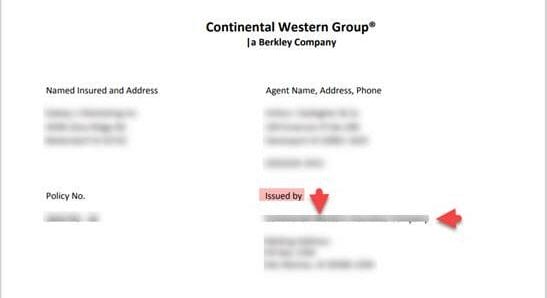
Please Note: Colorado Form WC 50 requires the name of your Insurer to be included on the Form prior to posting at your location(s). You can locate the name of your Insurer here on your policy.
Abbreviation: IA
Agency of Oversite: Iowa Division of Workers Compensation
Posting Notice: No Poster Required
Addional Posting Information: There is no posting notice requirement for employers that have secured workers compensation coverage or qualified as a selfinsurer. Only employers who have failed to secure coverage for the liabilities assumed under the Act must post a notice of the failure to insure.